
Send an enquiryEmail: available through the contact form

About

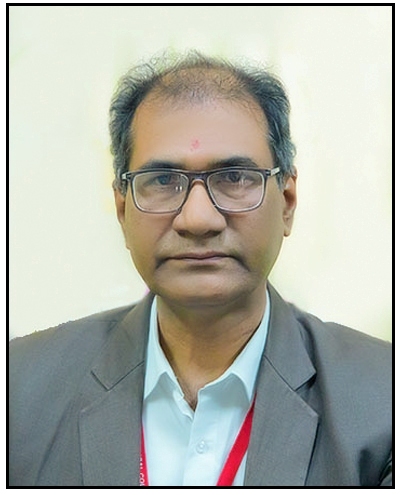
Academic profile of Dr. Mahendra Hariram Gaushal

Biography, qualifications, career timeline, teaching and administrative experience, research interests, and the academic vision behind Homoeo-bio-engineering.

Dr. Mahendra Hariram Gaushal, Director / Principal, Sonajirao Kshirsagar Homoeopathic Medical College and Hospital, Beed
Dr. Mahendra Hariram Gaushal

Biography

Dr. Mahendra Hariram Gaushal is a homoeopathic physician and academic. His published biodata records long experience in teaching at undergraduate and postgraduate level, with research and academic administration alongside.

His interest in measurement science is reflected in his training. He completed two certificate courses in Biomedical Instrumentation at the SGGS Institute of Engineering and Technology, Nanded, in 1997 and 1998. This interest in measurement science has shaped his later research and teaching.

He is listed as Director / Principal of Sonajirao Kshirsagar Homoeopathic Medical College and Hospital, Beed, Maharashtra, in the institution's teaching-staff listing updated on 13 October 2026. Earlier appointments are summarised in the timeline below.

Designations and dates are taken from official institutional sources and from the author's published biodata. They will be updated as they are confirmed.

Educational qualifications

Completed qualifications

Only completed qualifications are listed. Courses in progress are not included.

Qualifications as stated in the published biodata
QualificationAwarding body (as stated)Year
D.H.M.S. (Diploma in Homoeopathic Medicine and Surgery)Court of Examiners, Bombay (as stated in the biodata)1985 (May)
M.D. (Hom.)Sant Gadge Baba Amravati University, Amravati, Maharashtra2007 (June)
Certificate Course in Biomedical Instrumentation (C.B.M.I.), Course ISGGS Institute of Engineering and Technology, Nanded1997 (August)
Certificate Course in Biomedical Instrumentation (C.B.M.I.), Course IISGGS Institute of Engineering and Technology, Nanded1998 (May)
Academic career timeline

Career timeline

Historical positions are marked as historical. Dates are as stated in the published biodata and institutional listings. Where sources differ, the range is shown as given and marked for confirmation.

  1. 1990–1991
    Lecturer
    Homoeopathic medical college, Nanded (as listed in the biodata) Historical
  2. 1991–1993
    Lecturer
    Homoeopathic medical college, Parbhani Historical
  3. 1993–1994
    Lecturer
    Homoeopathic medical college, Bhiwandi, Dist. Thane Historical
  4. 1994–1998
    Assistant Professor
    Sahakar Maharshi Padmashri Shamrao Kadam Homoeopathic Medical College, Nanded Historical
  5. 1997–1998
    Certificate courses in Biomedical Instrumentation
    SGGS Institute of Engineering and Technology, Nanded
  6. 1998–2010
    Principal and Hospital Superintendent; Professor and Head, Department of Medicine
    K.D.M.G.'s Homoeopathic Medical College and Hospital, Shirpur, Dist. Dhule. Overlapping dates in the biodata are shown as a range and need owner review. Historical
  7. 2007
    M.D. (Hom.) awarded
    Sant Gadge Baba Amravati University
  8. 2010–2011
    Principal and Hospital Superintendent; Professor and Head, Department of Medicine
    Homoeopathic medical college, Miraj, Dist. Sangli (as listed in the biodata) Historical
  9. From 1 July 2011
    Professor and Head, Department of Psychiatry
    Sonajirao Kshirsagar Homoeopathic Medical College and Hospital, Beed Listed in the 2020 biodata. Current status to be confirmed.
  10. From 14 August 2014
    Professor and Coordinator, Department of Biomedical Engineering (an interdisciplinary departmental venture)
    Sonajirao Kshirsagar Homoeopathic Medical College and Hospital, Beed Listed in the 2020 biodata. Current status to be confirmed.
  11. From 29 August 2019
    Director / Principal
    Sonajirao Kshirsagar Homoeopathic Medical College and Hospital, Beed, Maharashtra Current (institutional listing, updated 13 October 2026)
Teaching and administrative experience

Teaching, postgraduate studies and administration

Undergraduate and postgraduate teaching

Lecturer and assistant professor roles from 1990 at several homoeopathic medical colleges in Maharashtra, followed by professorial and departmental roles. The biodata records teaching in undergraduate and postgraduate programmes.

Departmental roles at Beed

Listed in the biodata as Professor and Head, Department of Psychiatry (from 1 July 2011), and Professor and Coordinator, Department of Biomedical Engineering (from 14 August 2014). Current status to be confirmed.

Hospital and college administration

Principal and Hospital Superintendent roles at Shirpur (1998–2010) and Miraj (2010–2011), and Director / Principal at Beed from 29 August 2019.

Academic service

Secretary for a Basic Research Methodology Workshop for teachers of the Maharashtra University of Health Sciences (MUHS), held at SKHMC Beed in November 2013 (biodata).

Earlier board and council roles on an older profile page, including Chairman, Board of Studies (Homoeopathy), North Maharashtra University, Jalgaon, are listed for confirmation.

Interdisciplinary venture

Professor and Coordinator of the Department of Biomedical Engineering, an interdisciplinary departmental venture at SKHMC Beed, from 14 August 2014 (biodata). His measurement training includes two Certificate Courses in Biomedical Instrumentation at SGGS Nanded (1997 and 1998).

Research interests

Interdisciplinary work

The research interests are summarised below. The research page separates published work, protocols, projects and open questions.

  • Homoeopathy and health science education
  • Biomedical instrumentation and measurement
  • Bioelectrical measurement and physiological parameters
  • Bioelectrical impedance analysis (BIA)
  • Electrochemical impedance spectroscopy (EIS), with the distinctions explained on the BIA and EIS guide
  • Psychiatry and behavioural health research
  • Research methodology, biostatistics and interdisciplinary investigation

Homoeo-bio-engineering

Homoeo-bio-engineering is proposed as an interdisciplinary academic framework. It is not an officially recognised discipline. It asks how engineering tools and measurement methods can be used to study homoeopathic interventions with clear methods and cautious interpretation.

Collaboration with engineers, statisticians, clinicians and methodologists is central to this approach. Opportunities are listed on the events and collaboration page.

Academic vision

Vision

That measurement, transparent method and interdisciplinary research become ordinary parts of how homoeopathic interventions are studied, so that questions are asked clearly, answered with appropriate evidence and reported honestly.

Academic mission

Mission

  • Explain measurement fundamentals such as bioelectricity, impedance and instrumentation in clear academic English.
  • List only verified publications, and keep hypotheses separate from findings.
  • Encourage collaboration with engineers, statisticians, clinicians and research methodologists.
  • Share original, accurately referenced learning resources that can be used by students and researchers.
Common questions

About this profile and site

Is Dr. Gaushal currently Director / Principal?

The institution's teaching-staff listing, updated on 13 October 2026, shows him as Director / Principal from 29 August 2019.

Check the institutional listing (opens in a new tab) for the latest information.

Is Homoeo-bio-engineering a recognised discipline?

No. It is a proposed interdisciplinary academic framework.

It is intended for discussion, teaching and research design. It does not carry official accreditation. See the research disclaimer.

Is this website an official college or university website?

No. It is an independent personal academic initiative of Dr. Mahendra Hariram Gaushal.

It is not an official website of any college, university or government body, unless a formal endorsement is separately documented.

Does a measurement change prove that a homoeopathic treatment works?

No. A measured change, on its own, does not establish efficacy.

Conclusions require a pre-specified protocol, an appropriate comparison group, blinding where feasible, control of confounders and appropriate statistics. See research methodology and limitations.