What is the difference between resistance and reactance?
Resistance dissipates energy and is in phase with the voltage. Reactance stores and returns energy and shifts the phase of the current relative to the voltage.
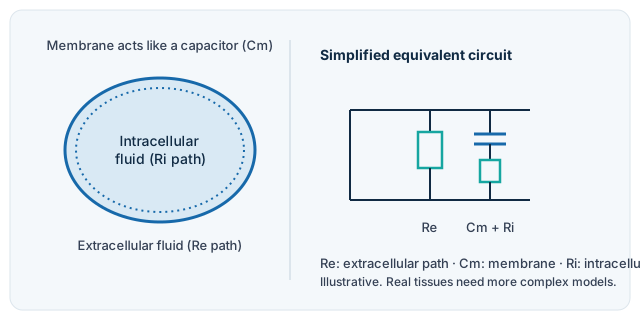
Resistance (R) arises from ionic conduction. Reactance (X) arises from capacitive (and, in other systems, inductive) elements. For an ideal capacitor, the reactance magnitude is Xc = 1 / (2πfC), so it falls as frequency increases.
How are they combined?
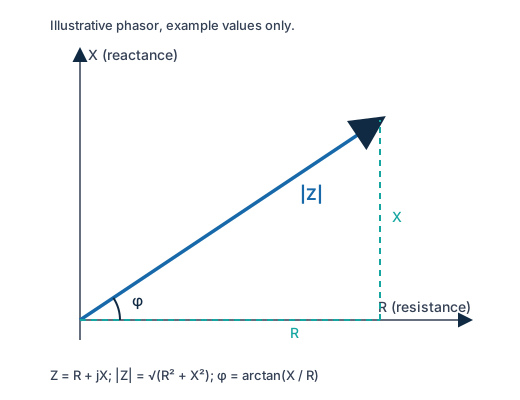
Impedance is the complex sum of resistance and reactance: Z = R + jX.
The magnitude is |Z| = √(R² + X²), and the phase angle is φ = arctan(X / R). By convention capacitive reactance is negative, although many device reports quote its magnitude, so sign conventions should always be stated.